House Price Predictions AI
Image
Image
Image

My Role

Machine Learning Developer – Predictive Analytics & Deployment

  • Feature Selection: Identifying structural, environmental, and location-based variables
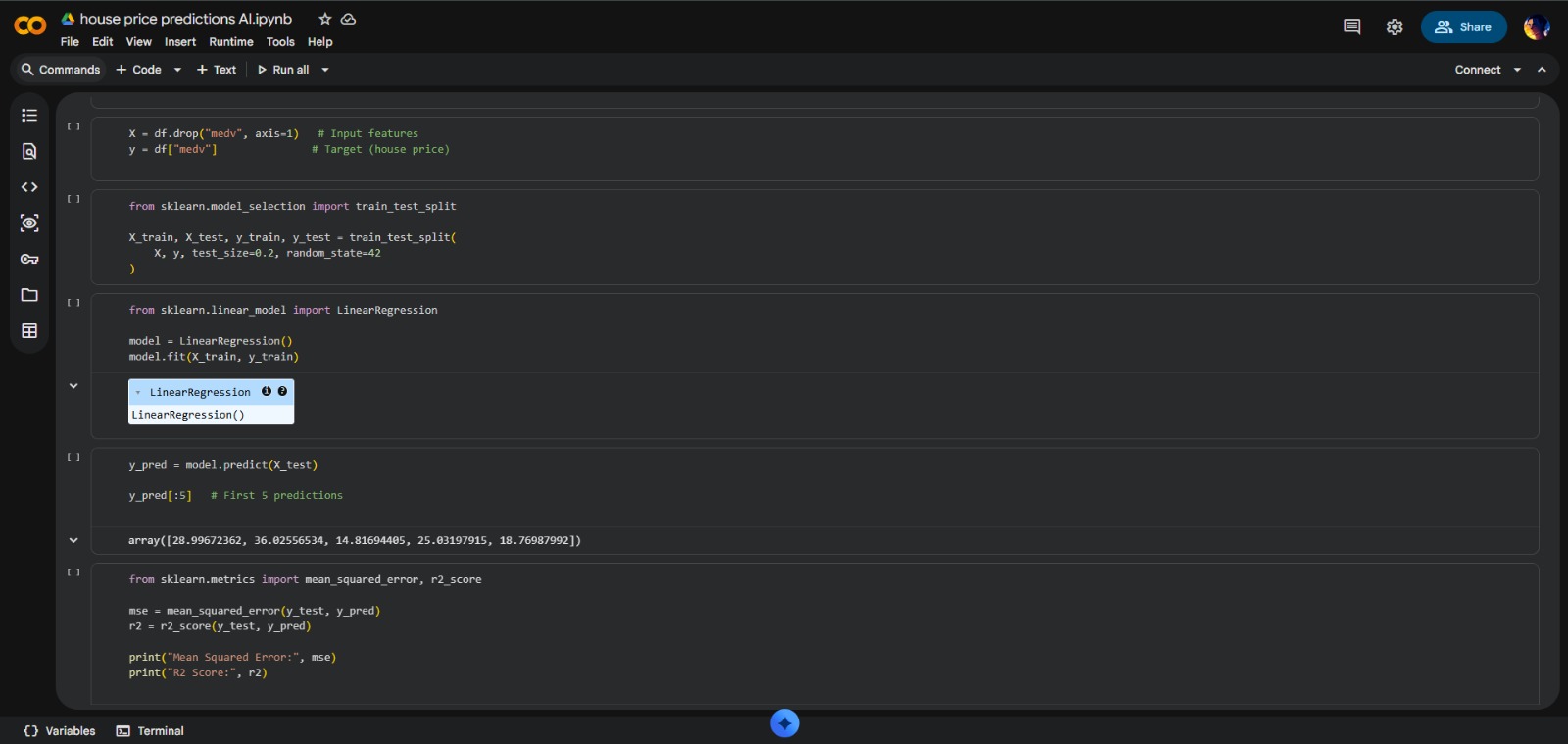
  • Data Partitioning: Implementing 80/20 train-test split for model generalizability
  • Regression Modeling: Training Linear Regression algorithm for price prediction
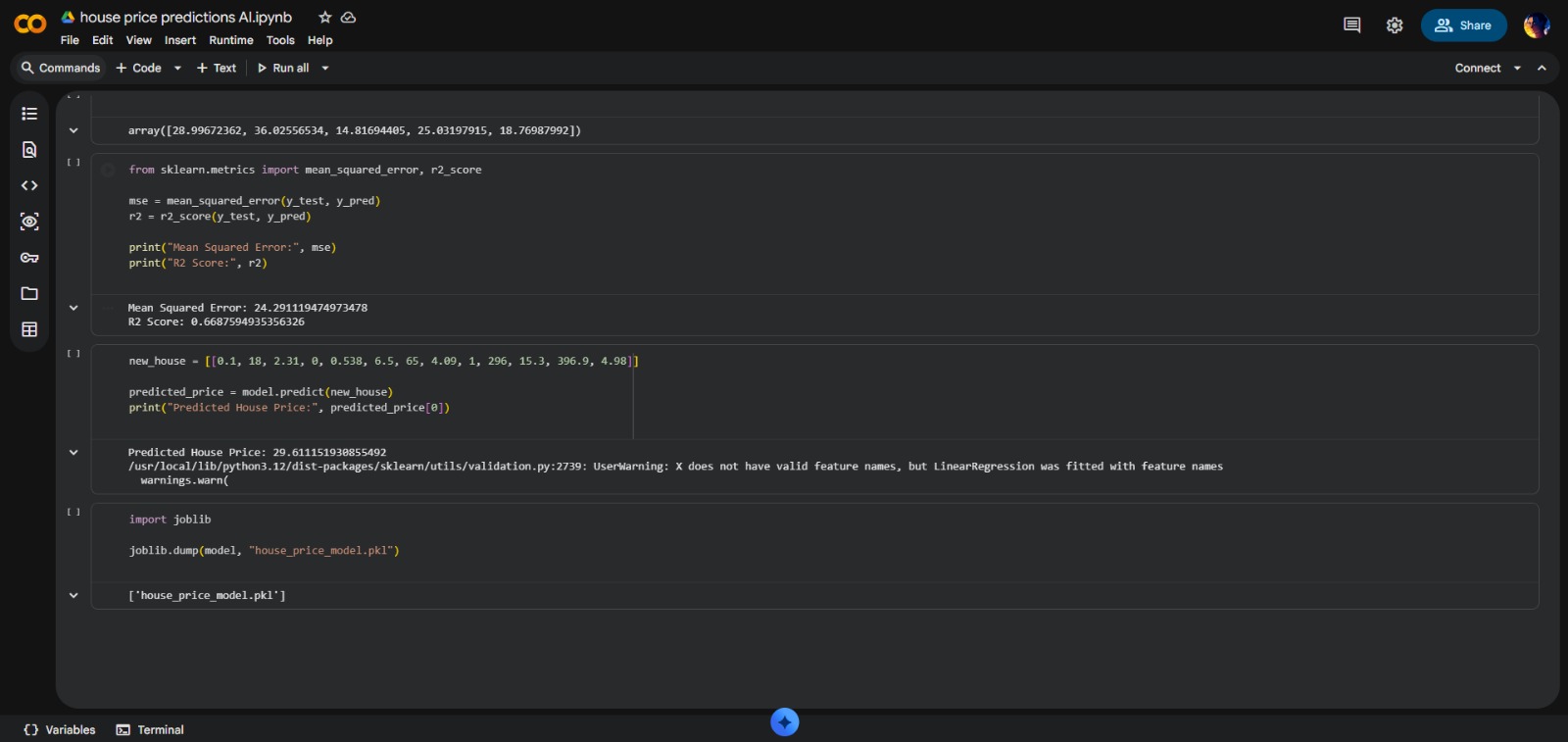
  • Evaluation & Metrics: Benchmarking with MSE and R2 Score for accuracy measurement
  • Model Serialization: Implementing persistence logic for production deployment

Project Highlights

  • End-to-End Workflow: Covers entire lifecycle from raw data to reusable model file
  • Mathematical Precision: Minimizes error through Ordinary Least Squares (OLS) method
  • Deployment Ready: Includes model saving (house_price_model.pkl) for production API
  • Clean Code Architecture: Modular imports and clear variable naming for maintainability
  • Real-World Applicability: Designed for financial forecasting and real estate valuation

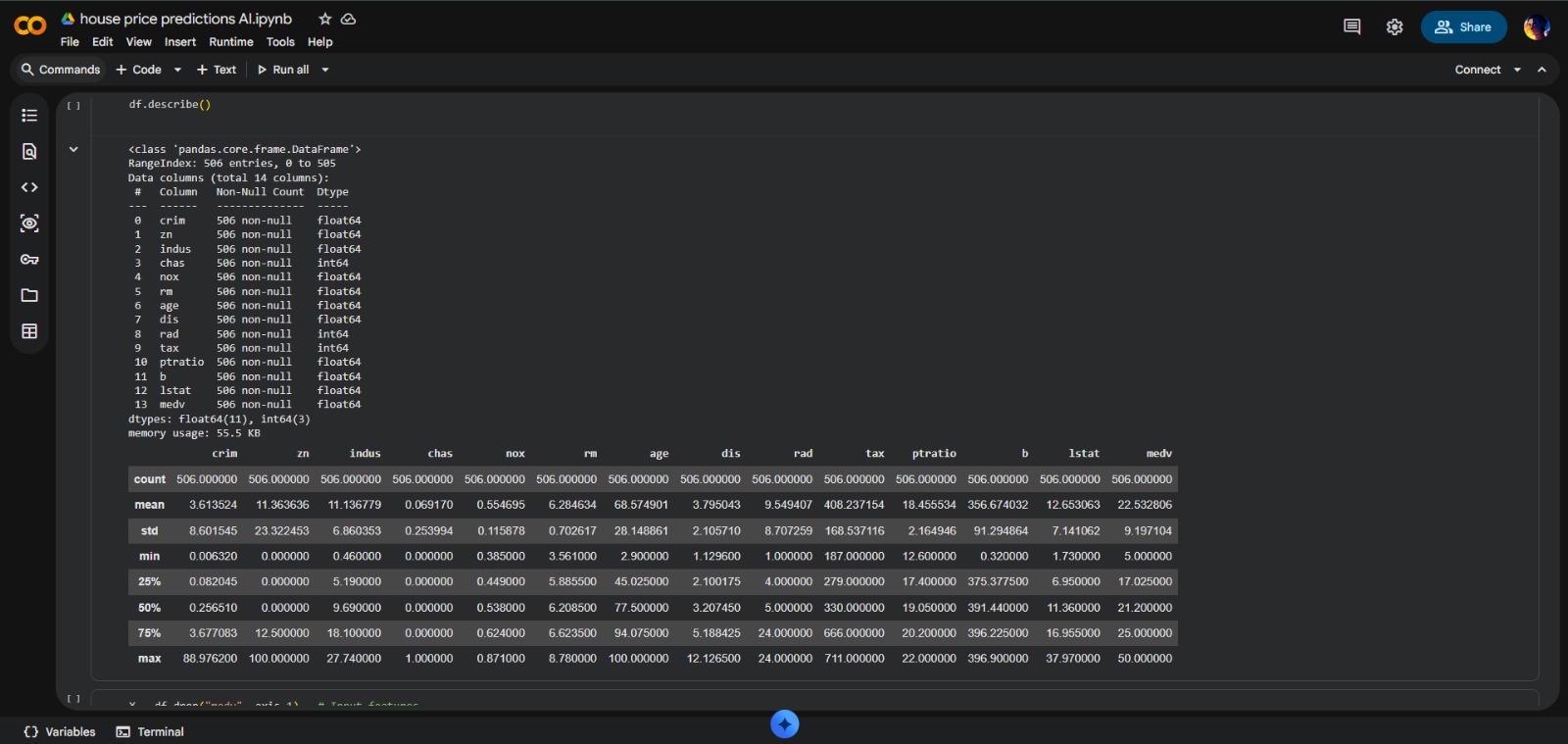
House Price Predictions AI is a machine learning project designed to estimate residential real estate values based on socio-economic and structural features. Utilizing the classic Boston Housing dataset, the project predicts the median house value (medv) by analyzing variables such as crime rates, room counts, and property tax rates.
I developed this project to demonstrate the application of supervised learning in financial forecasting and the ability to deploy trained models for real-world use cases, providing a practical tool for real estate valuation and market analysis.

The project follows a comprehensive regression analysis pipeline:

  1. Data Analysis: Exploration of Boston Housing dataset with 13 predictive features
  2. Feature Engineering: Selection of structural, environmental, and location variables
  3. Model Training: Linear Regression using Ordinary Least Squares method
  4. Validation Strategy: 80/20 split to prevent overfitting and ensure generalizability
  5. Performance Evaluation: MSE and R2 Score calculation for accuracy assessment
  6. Model Deployment: Serialization using Joblib for production integration

Technologies Used

  • Python 3 – Core environment for mathematical logic
  • Pandas – Dataset loading and manipulation
  • Scikit-Learn – Linear Regression and evaluation
  • Joblib – Model serialization and storage
  • Boston Housing Dataset – Real estate data source
  • NumPy – Numerical computations
  • Matplotlib/Seaborn – Data visualization
  • GitHub/Colab – Cloud development and version control

Key Features

  • Predictive Capability: Processes 13 unique real estate parameters
  • Standardized Evaluation: Uses MSE for error calculation
  • Dynamic Prediction Logic: Handles unseen market data
  • Feature Analysis: Identifies key price drivers
  • Persistent Storage: Saves trained model as .pkl file
  • Production Ready: Deployable in web or mobile applications
  • Statistical Validation: Comprehensive model testing
  • Scalable Architecture: Adaptable to larger datasets

Project Impact

  • Financial Forecasting: Provides accurate real estate price predictions for market analysis
  • Production Deployment: Model serialization enables integration into commercial applications
  • Educational Value: Demonstrates complete ML workflow from data to deployment
  • Industry Relevance: Addresses practical real-world problem in property valuation