Student Mark Prediction AI
Image
Image
Image
Image
Image

My Role

Data Analyst & ML Developer – Linear Modeling & Error Analysis

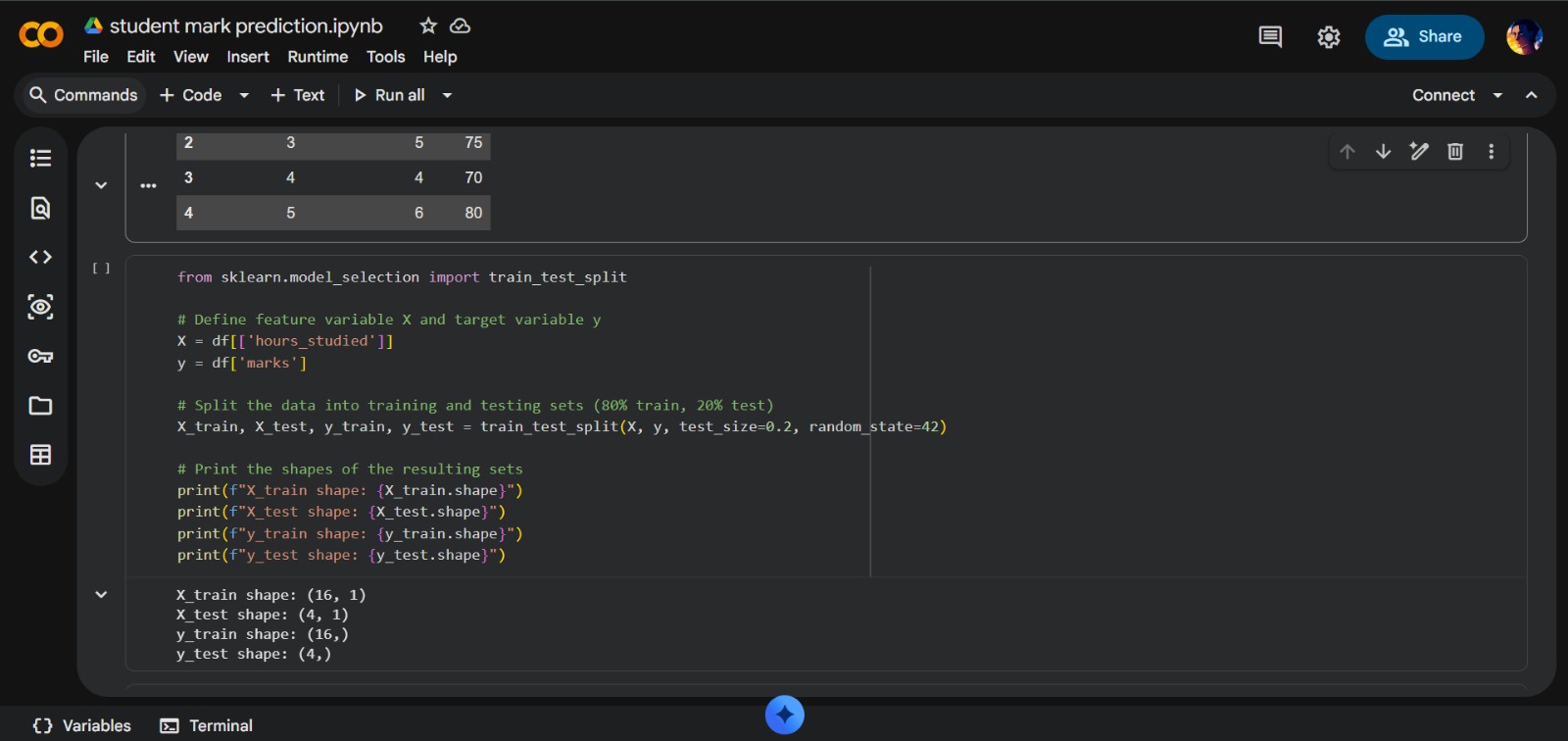
  • Feature Engineering: Structuring dataset to isolate time management impact
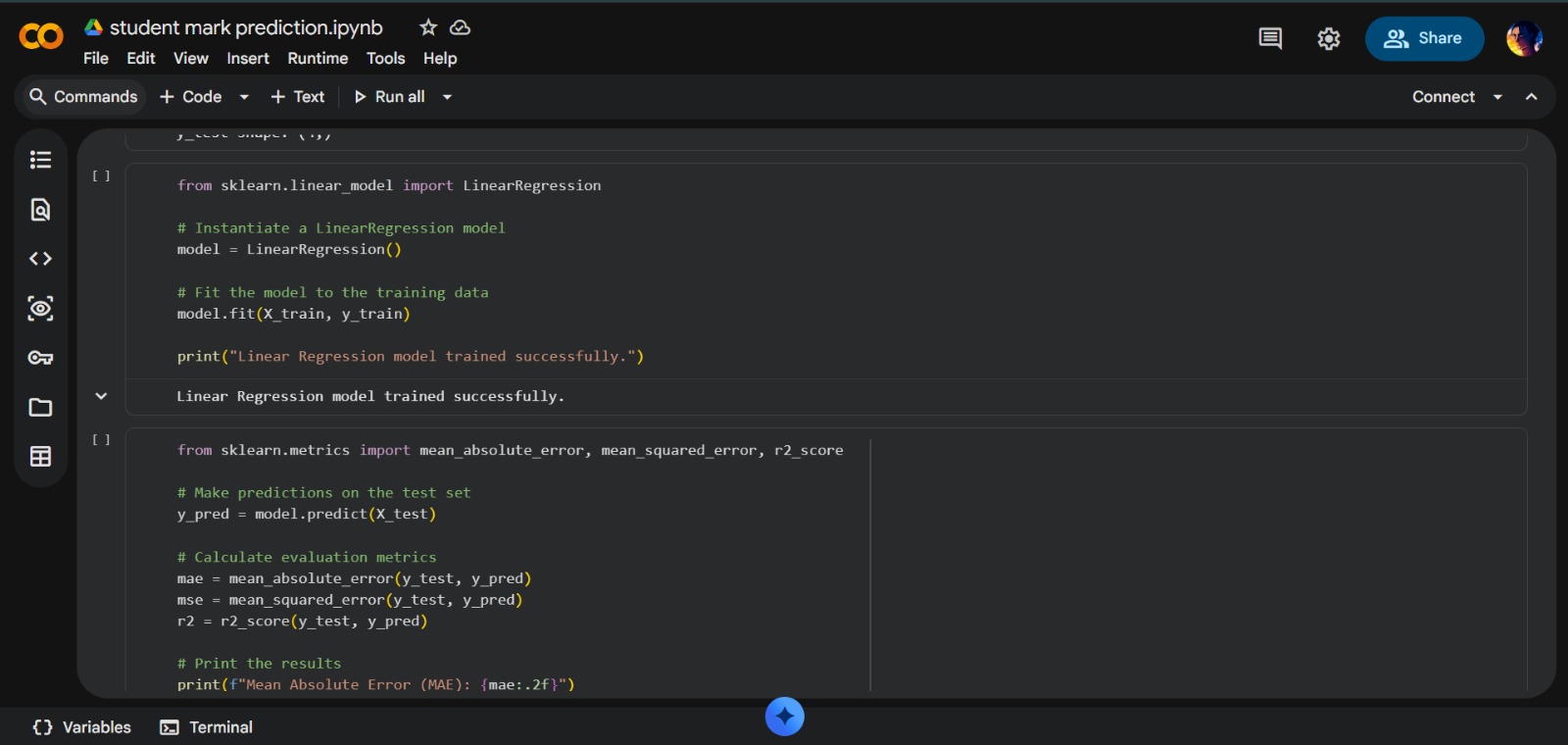
  • Supervised Learning Implementation: Training Linear Regression for "Line of Best Fit"
  • Predictive Accuracy Assessment: Evaluating with MAE and R-Squared scores
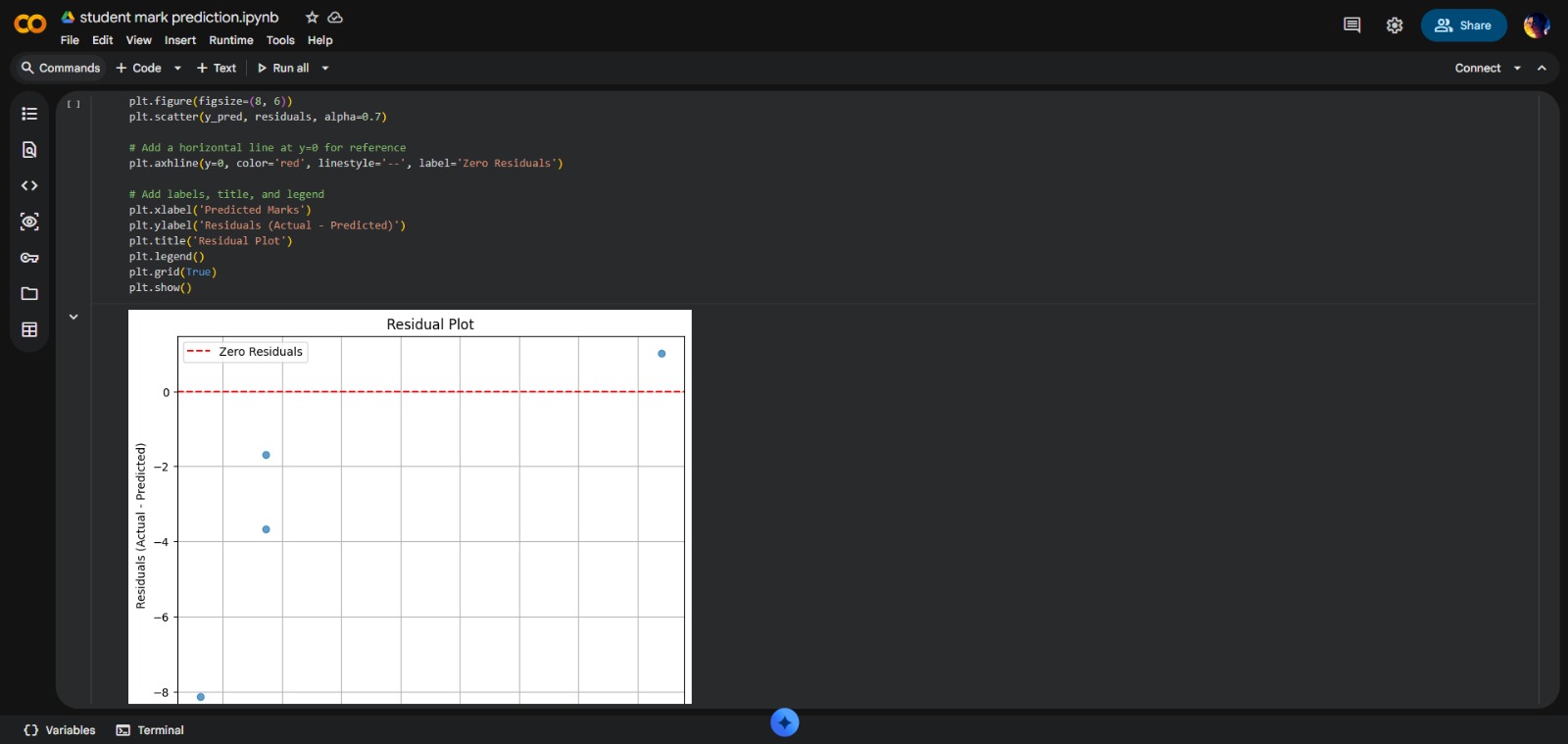
  • Residual Diagnostics: Detailed analysis for homoscedasticity and error distribution
  • Visual Data Storytelling: Comparative plots for theoretical vs actual performance

Project Highlights

  • High Interpretability: Classic $y = mx + c$ formula for easy explanation
  • Diagnostic Accuracy: High R-Squared score proving statistical significance
  • Scientific Error Tracking: MSE to penalize larger prediction gaps
  • Deployment Foundation: Modular structure for scalable educational dashboards
  • Academic Focus: Demonstrates core principles of Simple Linear Regression

Student Mark Prediction AI is a regression-based machine learning project designed to quantify the relationship between study habits and academic outcomes. By analyzing the correlation between "Hours Studied" and "Marks Obtained," the model provides a mathematical estimate of a student's potential score.
I developed this project to demonstrate the core principles of Simple Linear Regression, focusing on how a single independent variable can be used to forecast performance trends in an educational setting, providing valuable insights for students and educators alike.

The project implements a comprehensive linear regression pipeline:

  1. Data Correlation Analysis: Establishing relationship between study hours and marks
  2. Linear Regression Modeling: Finding the "Line of Best Fit" for academic prediction
  3. Performance Metrics: Calculating MAE, MSE, and R2 for model validation
  4. Residual Diagnostics: Ensuring homoscedasticity and random error distribution
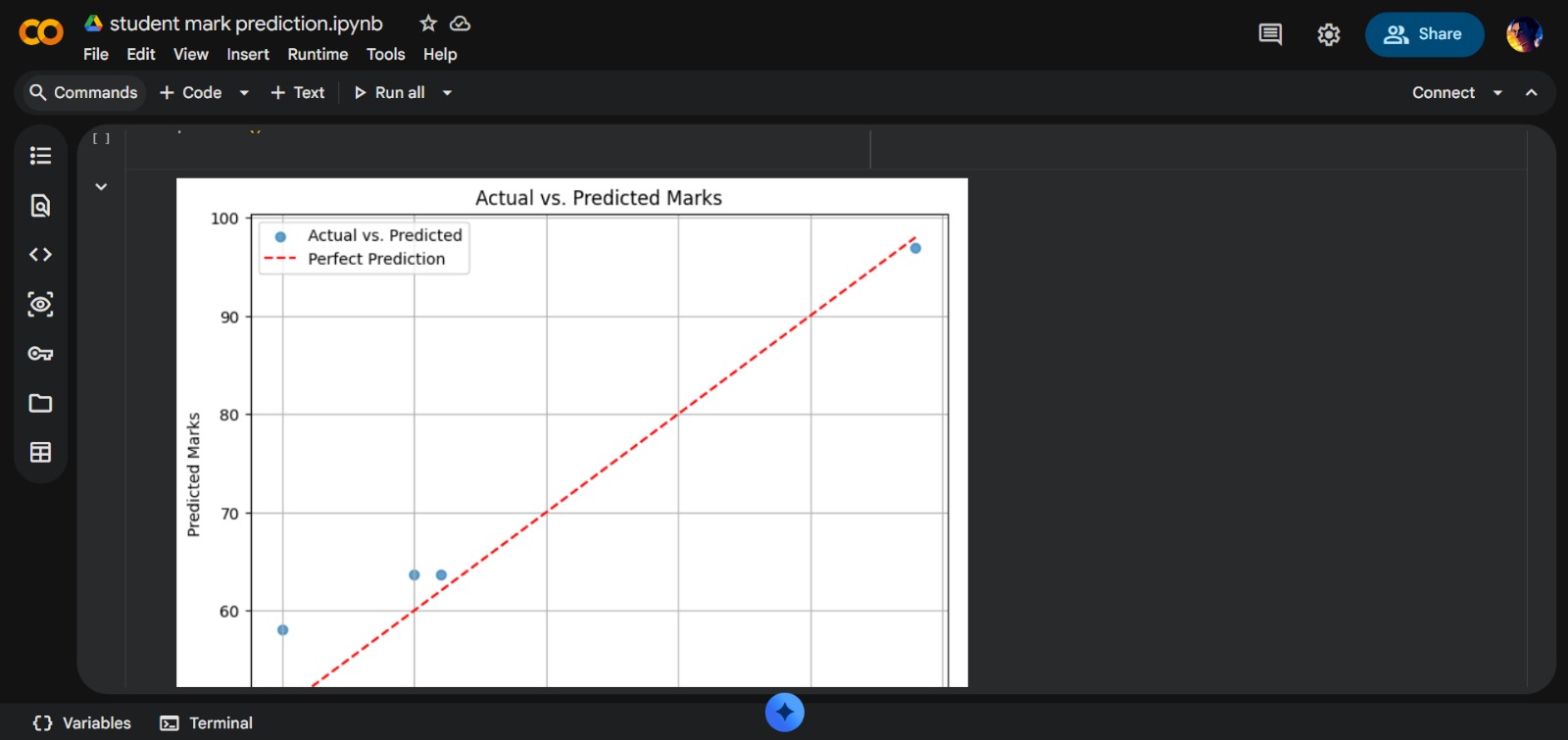
  5. Visual Validation: Actual vs Predicted plots with 45-degree reference line
  6. Educational Insights: Translating statistical results into academic guidance

Technologies Used

  • Python 3 – Primary environment for statistical computing
  • Scikit-Learn – Linear Regression engine and evaluation metrics
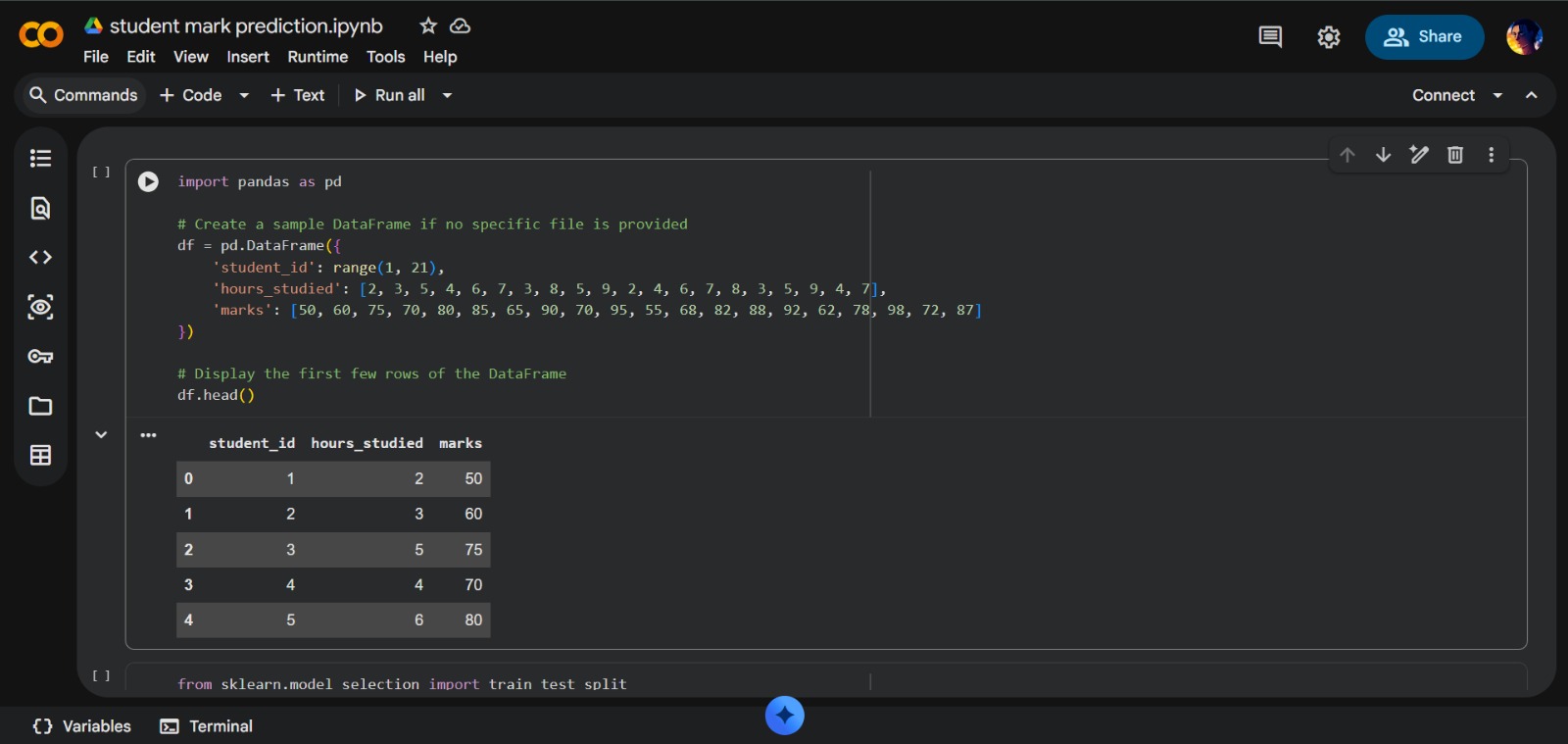
  • Pandas – Data structuring and student records management
  • Matplotlib – Scatter plots and residual diagnostic charts
  • NumPy – Mathematical operations and visualization range
  • Student Academic Data – Study hours vs marks dataset
  • Statistical Analysis – Regression and correlation techniques
  • Educational Analytics – Academic performance insights

Key Features

  • Linear Trend Forecasting: Exact marks prediction from study duration
  • Performance Validation Line: 45-degree reference for prediction accuracy
  • Residual Mapping: Distance measurement between actual and predicted
  • Automated Scoring Pipeline: MAE, MSE, R2 calculation for model "grading"
  • Reproducible Splits: Fixed random_state for consistent data partitioning
  • Study ROI Analysis: Insights into study time effectiveness
  • Academic Trend Identification: Statistical correlation evidence
  • Educational Application: Practical tool for student performance management

Educational Impact

  • Study Optimization: Helps students understand study time effectiveness
  • Early Intervention: Identifies students needing additional academic support
  • Data-Driven Education: Provides evidence-based insights for educators
  • Academic Planning: Supports goal setting and performance improvement strategies
  • Statistical Literacy: Demonstrates practical application of linear regression in education